
Image courtesy of Jarvin Hernandez.
West Street
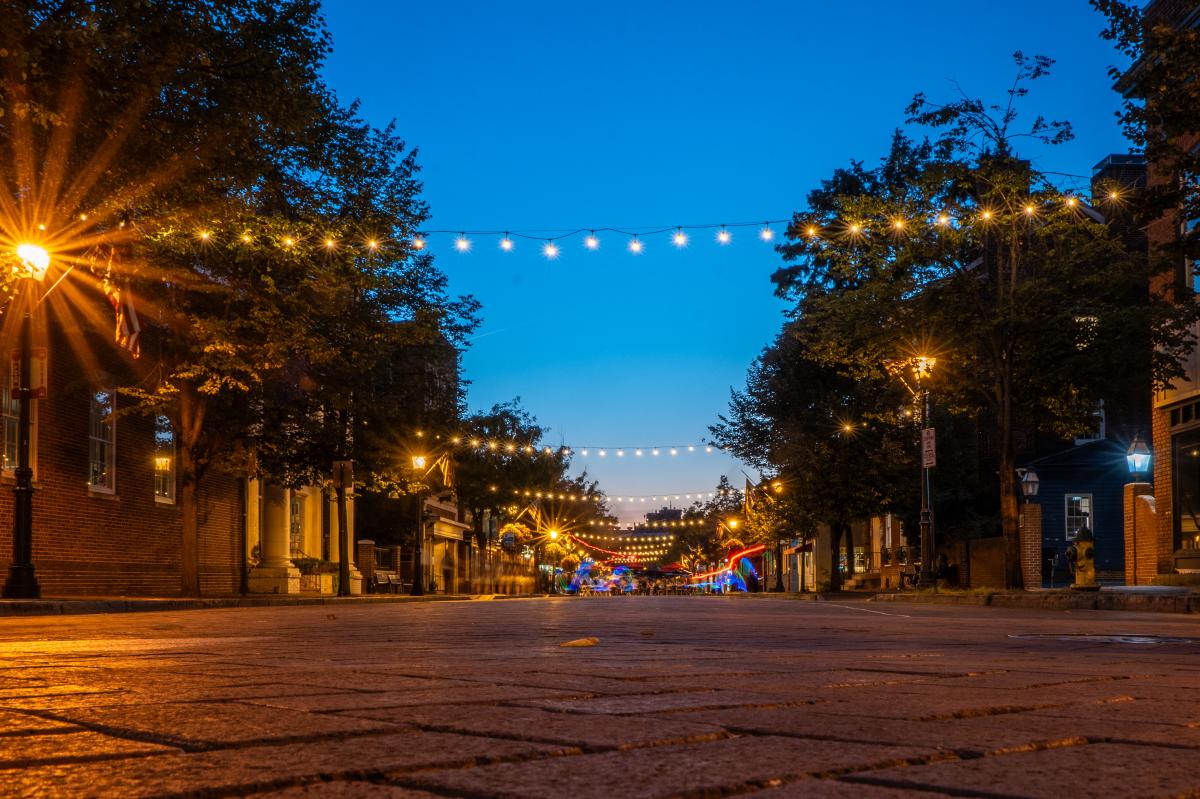
Begin your journey on West Street, one of the historic gateways into Annapolis and home to the Arts and Entertainment District today. Originally a mix of taverns, inns, and businesses, West Street today maintains its role as a major artery through the city and thrives with live music, diverse dining experiences, art galleries and more.
Rams Head Tavern
33 West Street
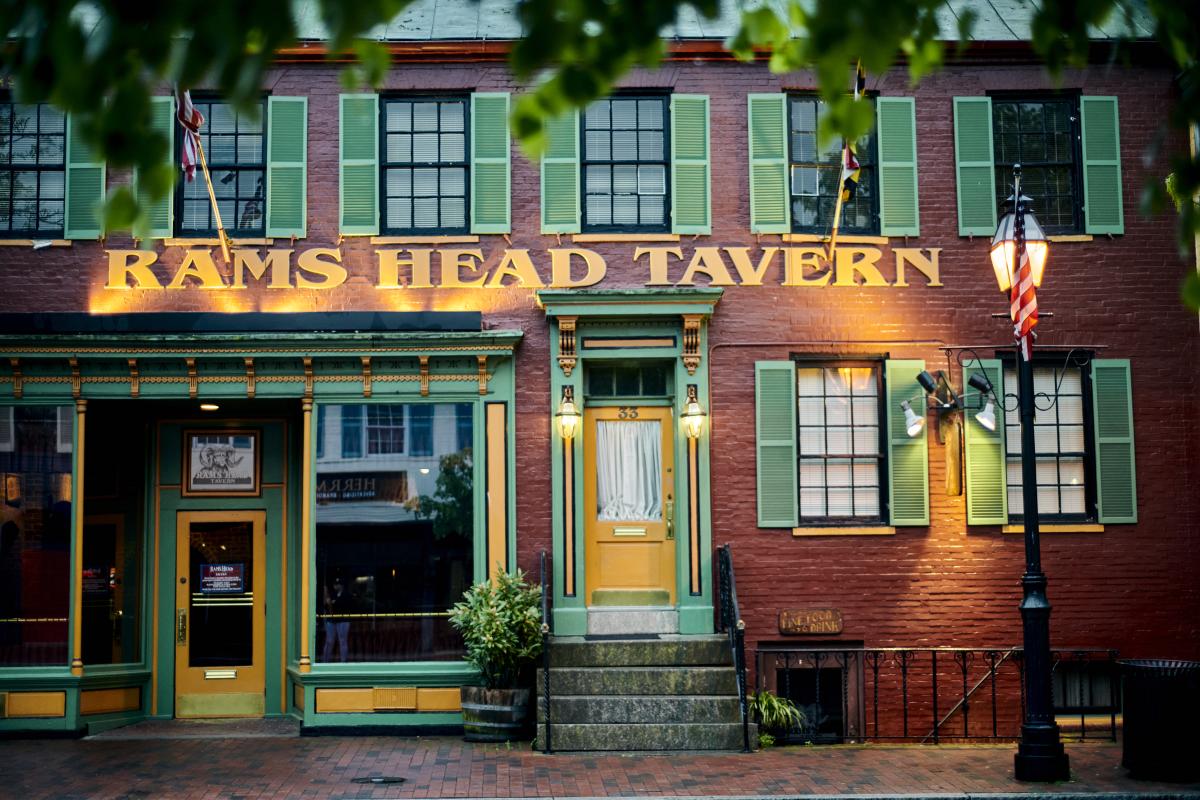
Step inside this West Street landmark and enjoy a pint by Fordham & Dominion Brewing Co., named for brewer Benjamin Fordham who arrived in Annapolis in 1700, set up a brewery, and opened an ordinary on Francis Street. Although the building was constructed between 1831 and 1849, the land itself has connections to many prominent residents, including Declaration of Independence signer Samuel Chase who leased it in 1769. Venture out to the shady back patio and find the white circular smokehouse from the early 19th century. Canine companions can also get a taste of the fun, as Rams Head offers a special (non-alcoholic of course) doggy beer and noshes when seated out front.
Church Circle
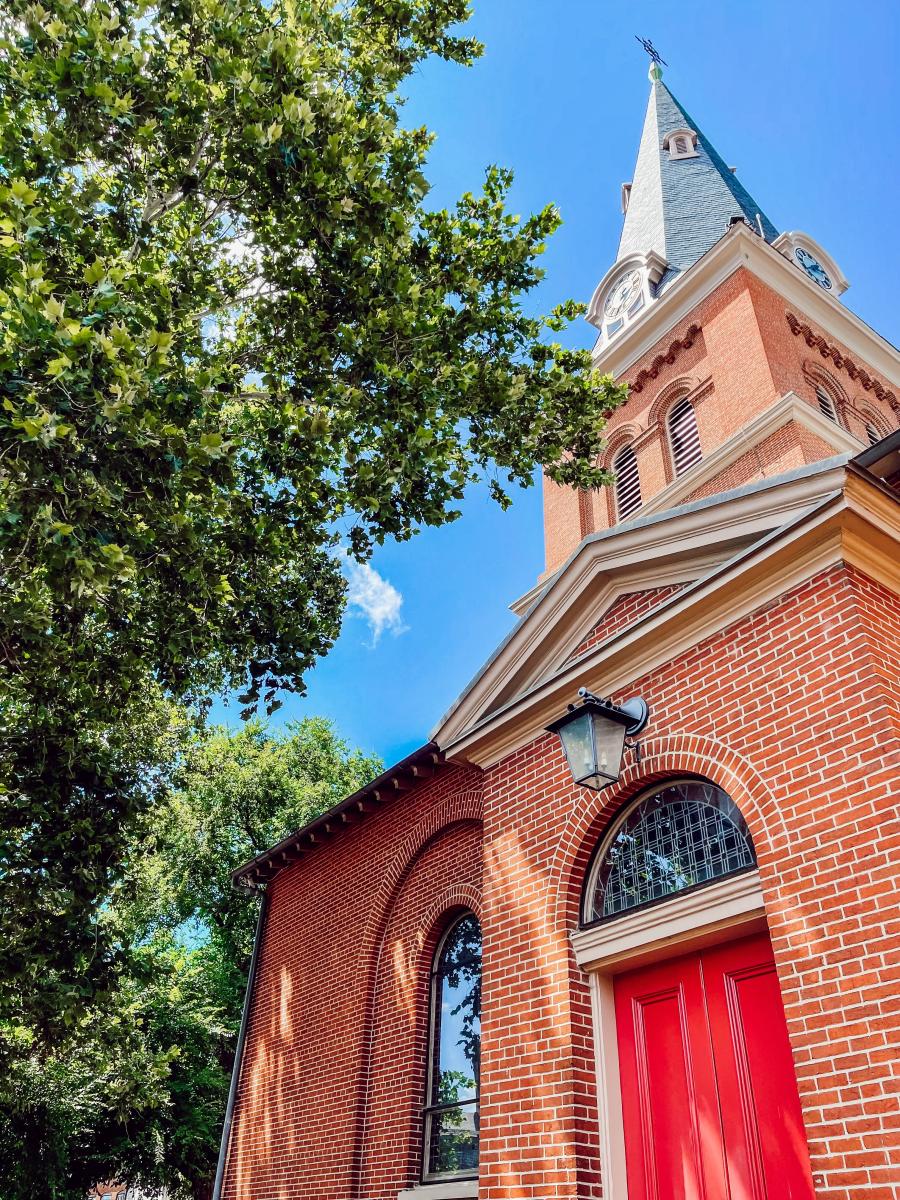
St. Anne’s Episcopal Church resides in the center of the circle and is the third church structure on this site. The first was constructed circa 1700 but was rebuilt in 1792. The second church burnt down in 1858 and was rebuilt and completed a year later. Church Circle is one of two central circles from which streets in Annapolis radiate, the other being State Circle.
Reynolds Tavern and 1747 Pub
7 Church Circle
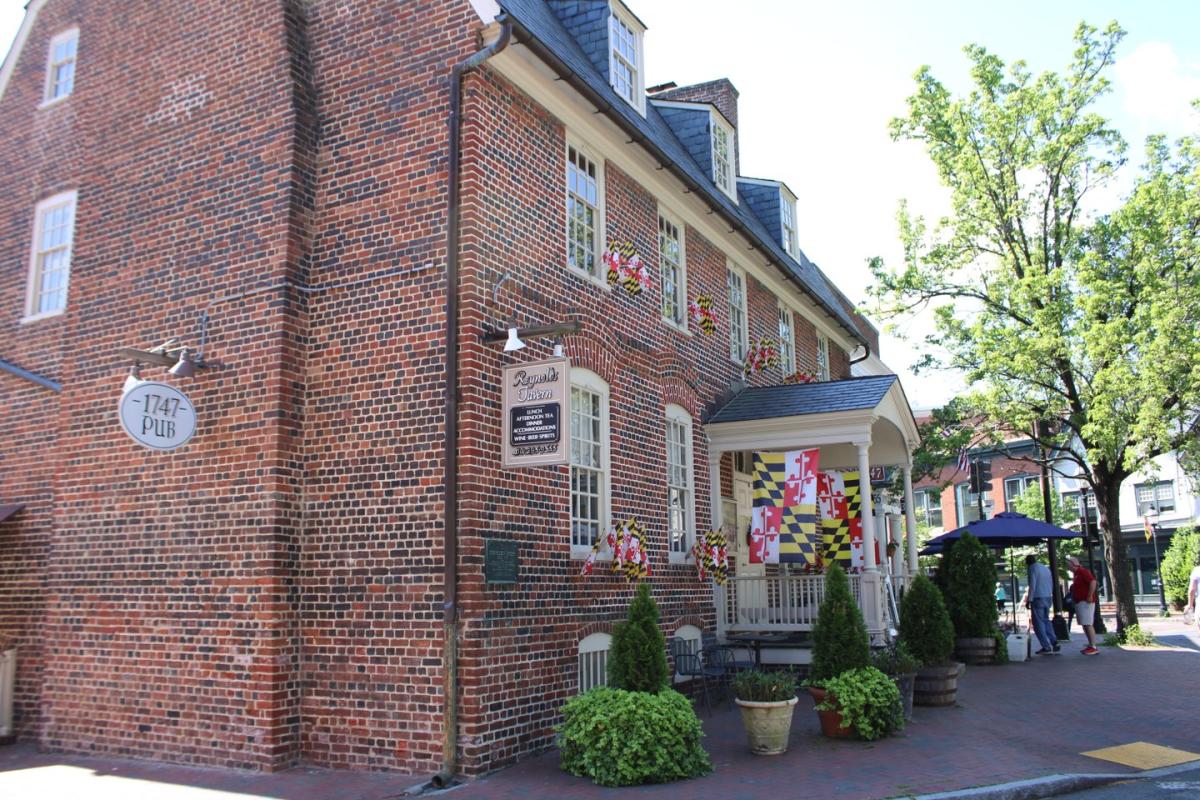
Whether you’re in the mood for elegant hand-selected tea (including blends favored by George Washington and Thomas Jefferson) and a tower of delicate sweets and savories, or a cozier vibe to enjoy a beer and a meal, you’ll find yourself steeped in history in this building from 1747. Although the building was owned by proprietor and hat maker William Reynolds, Mary Fonnereau (who later became Mrs. Reynolds) leased the building and ran the tavern beginning in 1755. According to a notice in the Gazette, she advertised the home as large with many rooms, and “good Wines and other Liquors.” By the mid-1760s it was known as “The Beaver and Lac’d Hat” and was a central business hub of Annapolis. Reynolds renewed his tavern license every year until 1767, when, deeply in debt, he focused solely on hat-making. Reynolds died in 1777, and the property passed on to Mary, then her daughter.
State Circle
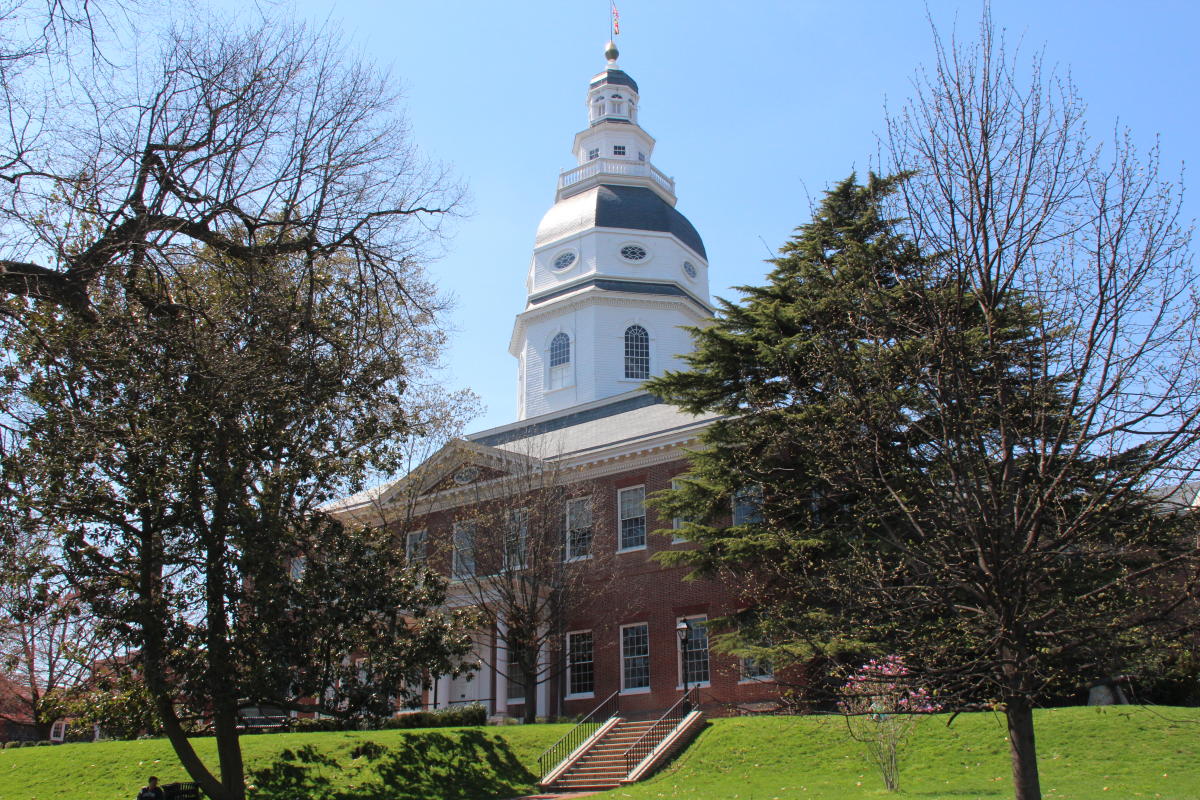
State Circle, the government counterpart to Church Circle, is home to the Maryland State House, which served as America’s first peacetime capital building and is the oldest statehouse in the country still serving its original purpose. Its iconic dome is capped by an “acorn” representing wisdom and holds a lightning rod designed by Benjamin Franklin. Inside, find the spot where George Washington resigned as leader of the Continental Army, a vast collection of 18th-century art, including the famous Charles Willson Peale painting, Washington, Lafayette, and Tilghman at Yorktown, and life-sized bronze statues of freedom-seekers Frederick Douglass and Harriet Tubman. Outside, Take note of the original alleyways connecting Main Street to State Circle, like Chancery Lane and Cabbage Alley, now affectionately known as Snowflake Alley due to the snowflake lights strung up every holiday season. Open to the public; ID required for entry.
Parley Room
25 State Circle
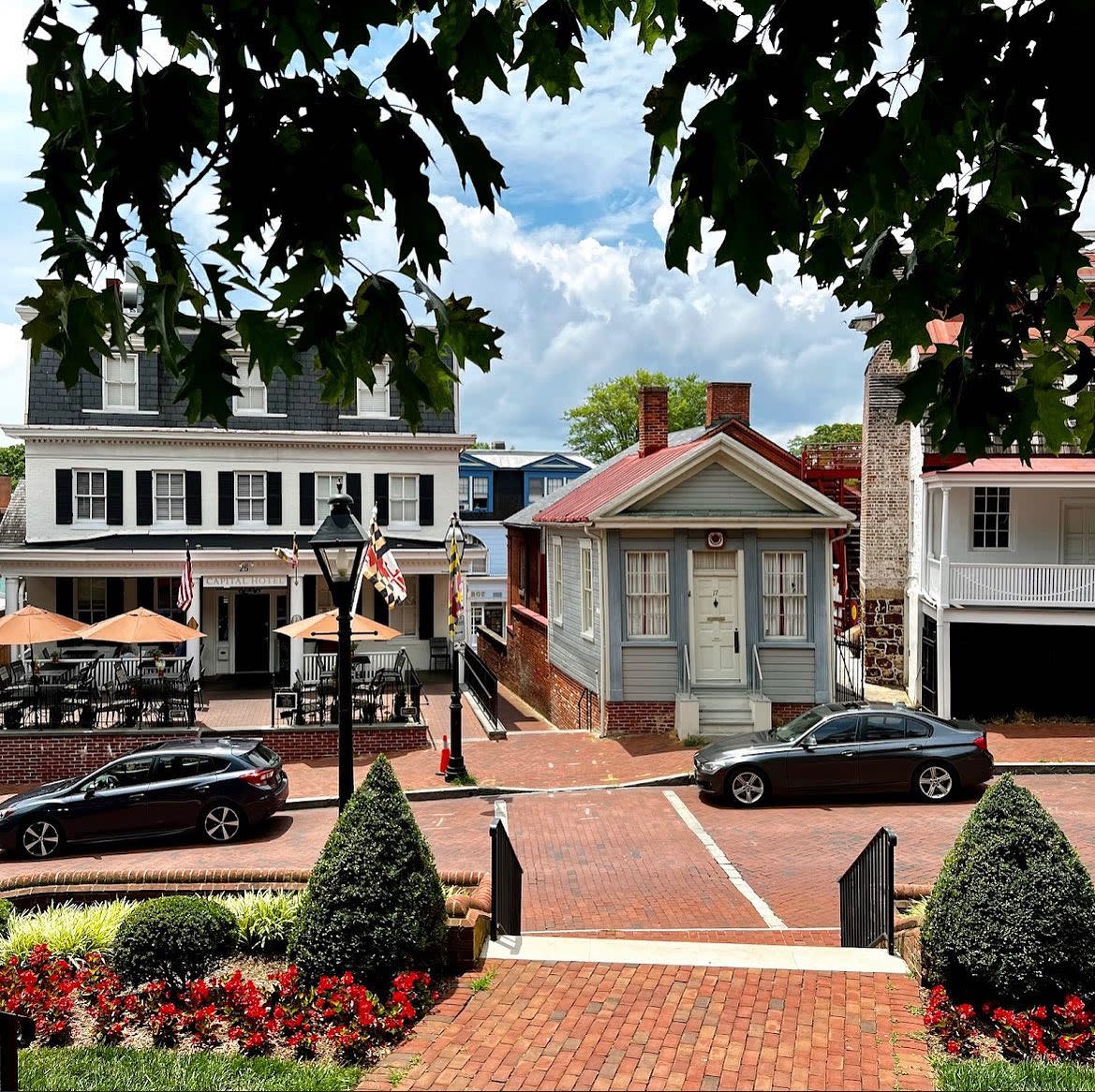
Image courtesy of @Capitalhotelannapolis.
As you approach Parley Room, located inside of the Capital Hotel, take a moment in front of Chancery Lane to look at the State House, and envision George Washington descending the hill on a cold day on December 23, 1783, after resigning his commission as head of the Continental Army before going home to Mount Vernon as a private citizen. Head inside Parley Room and find yourself in a speakeasy with local oysters, small plates, as well as inventive cocktails and mocktails.
Harry Browne’s
66 State Circle
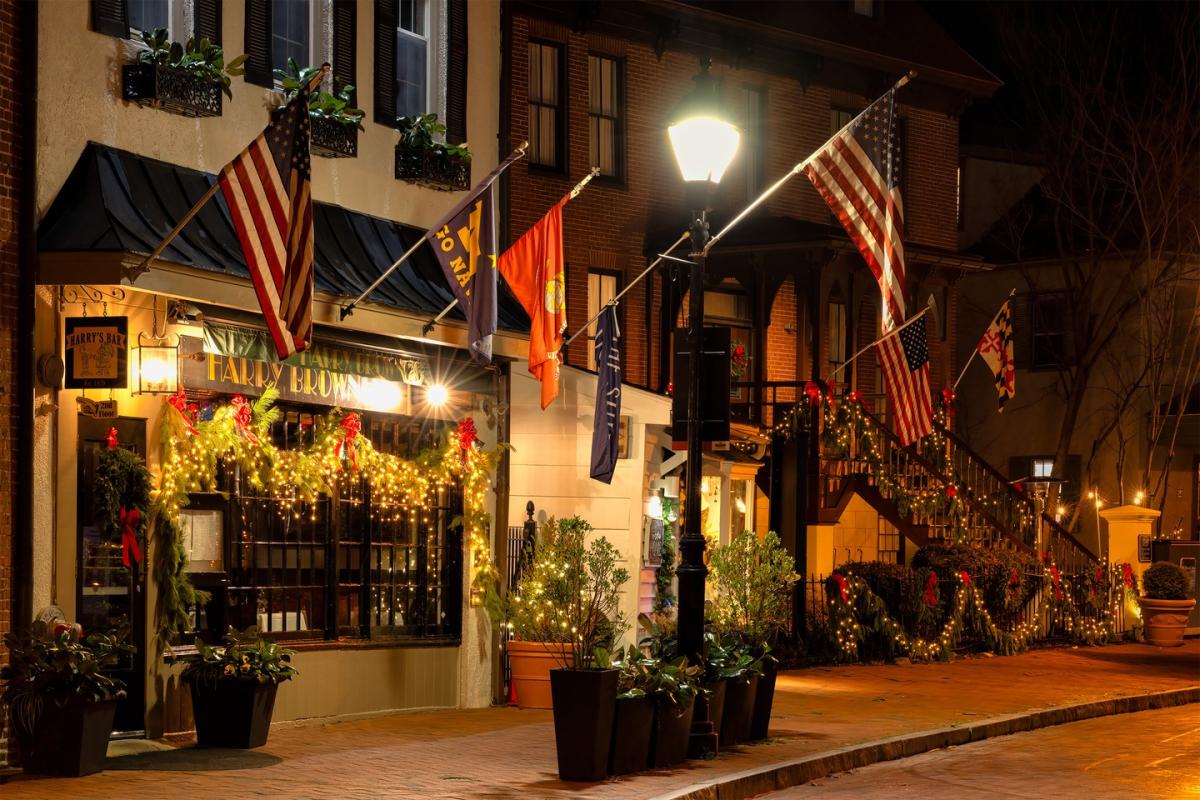
Image courtesy of @Leemgoodwin.
Harry Browne’s is located on property originally part of the large tract of land associated with the family of Lord Baltimore. Governor Calvert House, visible from the front windows, is the home from the original tract. It was the residence of Benedict Calvert, governor of Maryland from 1727 to 1731 and the illegitimate son of Charles Calvert. The circumstances of his birth did not preclude his daughter, Eleanor, from marrying John Parke Custis, better known as “Jacky”—the stepson of George Washington from Martha’s first marriage—when she was just 16. While both sets of parents initially disapproved of the marriage due to their youth, they were married and had seven children. Jacky was his stepfather’s aide-de-camp at Yorktown where he succumbed to “camp fever.” Upon Eleanor’s remarriage to Virginian physician David Stuart in 1783, George and Martha adopted their two youngest children, Eleanor "Nelly" Parke Custis and George Washington Parke Custis. Inside the Governor Calvert House, you can find numerous archeological artifacts on display related to colonial eating and drinking.
Maryland Avenue
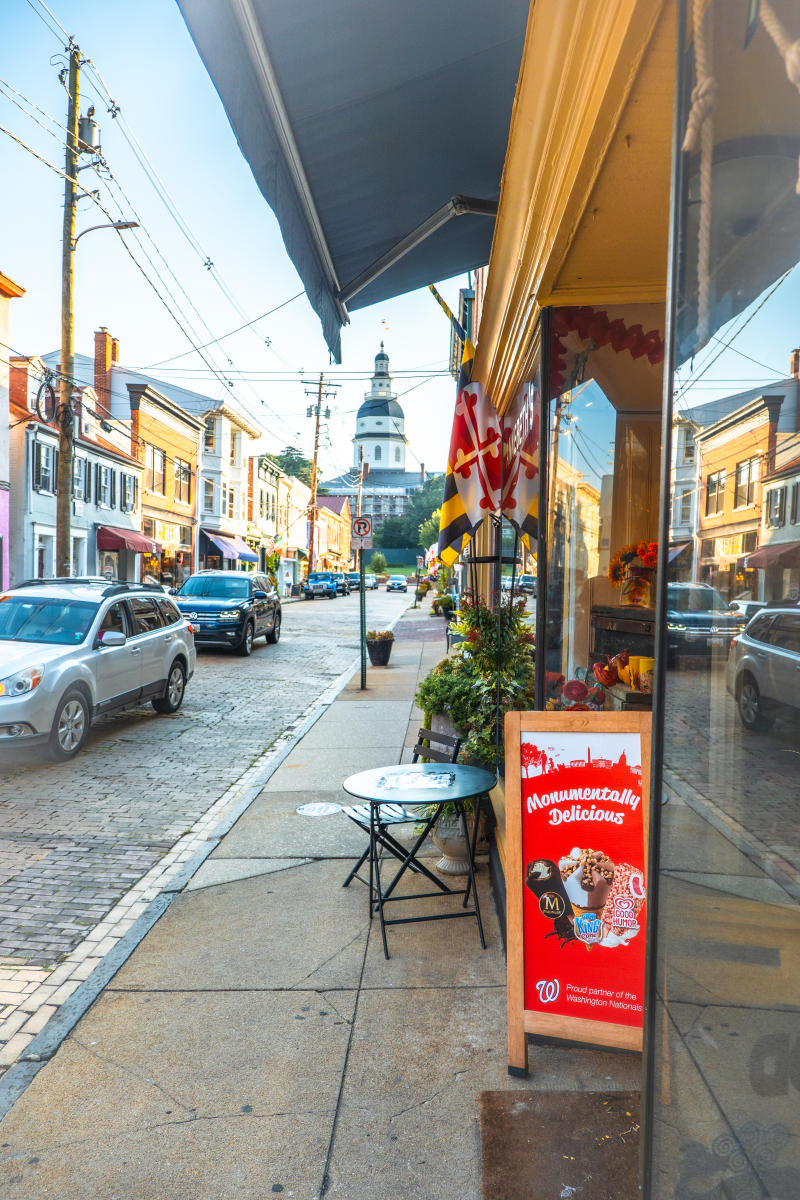
Step onto Maryland Avenue, one of the oldest commercial streets in the State of Maryland. Along this quaint brick road discover a blend of funky businesses, cozy restaurants, coffee shops and iconic colonial homes, including Hammond Harwood House and Chase Lloyd House, residence of Samuel Chase, signer of the Declaration of Independence.
Galway Bay
63 Maryland Avenue
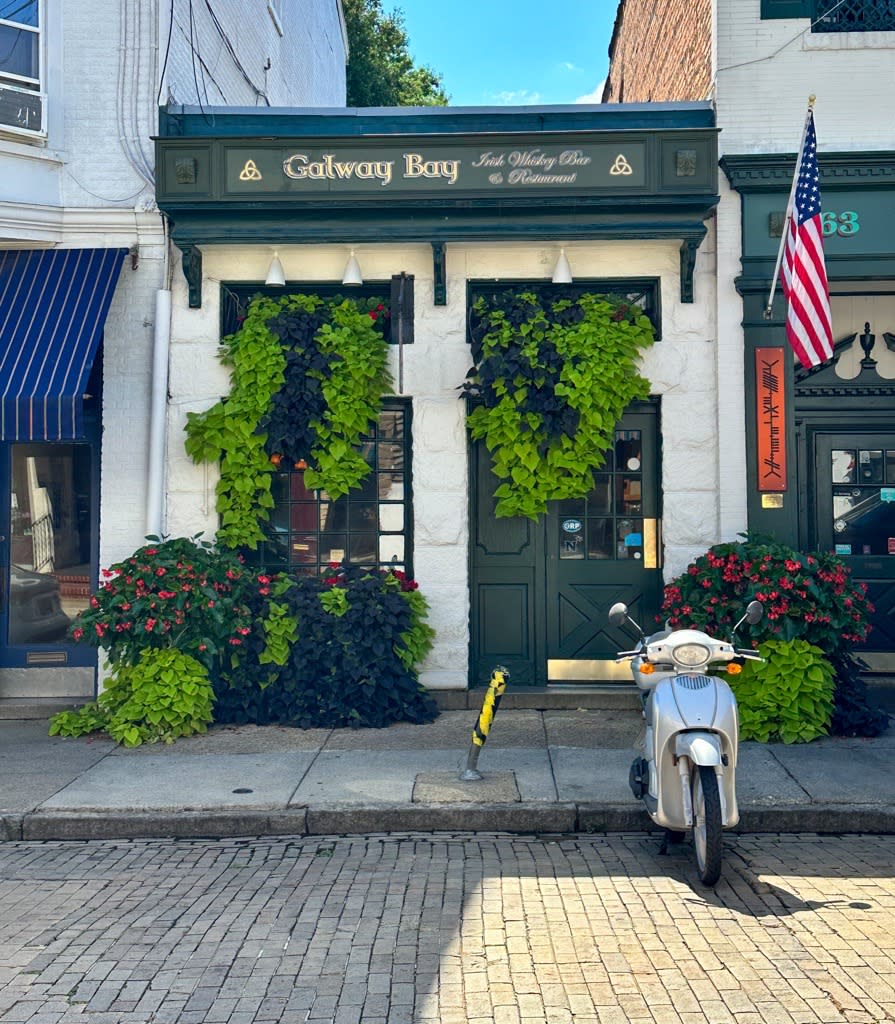
While the building today was built at the turn of the 20th century, the chain of title for this property along with the neighboring parcels, can be traced back to 1730 when heirs of Amos Garret, the first mayor of Annapolis, transferred it to a carpenter named John Smith. Today, this Annapolitan landmark owned by Irish friends Michael Galway and Anthony Clarke has been serving classic Irish fare and live music in a warm setting for nearly 30 years.
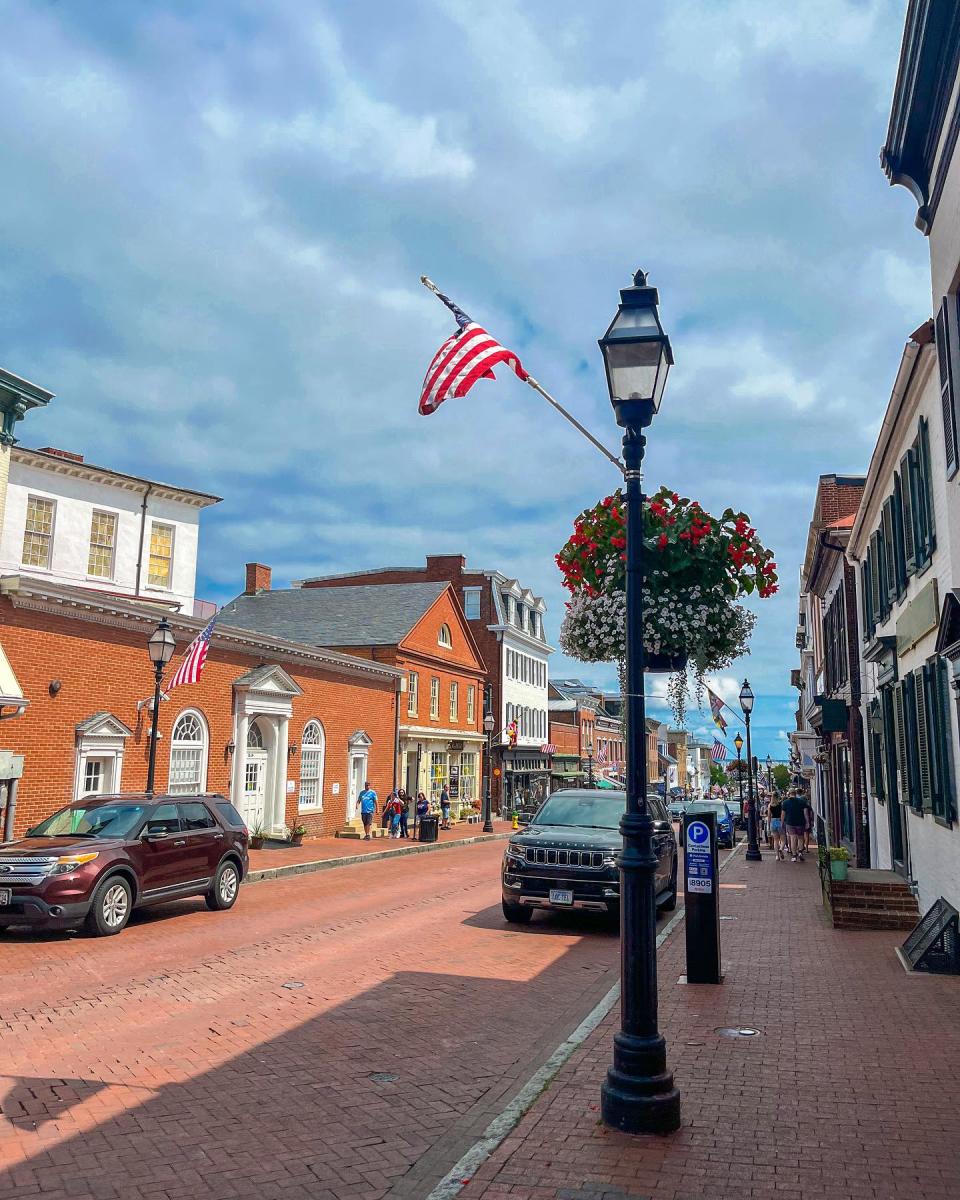
Image courtesy of @Jaytravelsworld.
Main Street
Stand at the top of Main Street and take in more than 300 years of history. The vista down to the harbor is the same as seen through colonial eyes. All around you are sights like the Annapolis waterfront, narrow alleyways, the Maryland Inn and the iconic Maryland State House dome that were seen by colonials going about their days.
Drummer’s Lot Pub
16 Church Circle
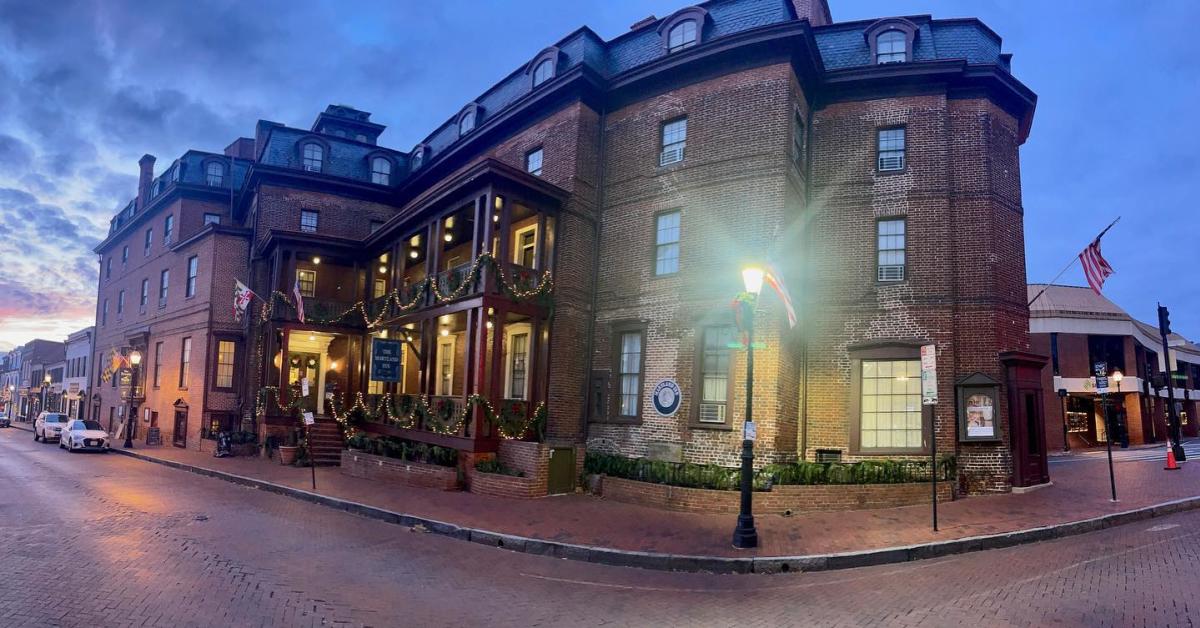
Image courtesy of Historic Homes of Annapolis.
This plot of land was set aside for the use of the “Drummer of the Town” for “the beating of the drum and keeping the Gate." Constructed between 1772 and 1782, the Maryland Inn is one of the few inns in the country in continuous operation for over 250 years. In the basement is the Drummer’s Lot Pub, where the revolutionary vibes are palpable, and you can try their take on historic cocktails, like Ben Franklin’s rum punch. Sit in the same space as the members of the Continental Congress who stayed at the Inn and frequented the tavern while they ratified the Treaty of Paris, ending the American Revolution!
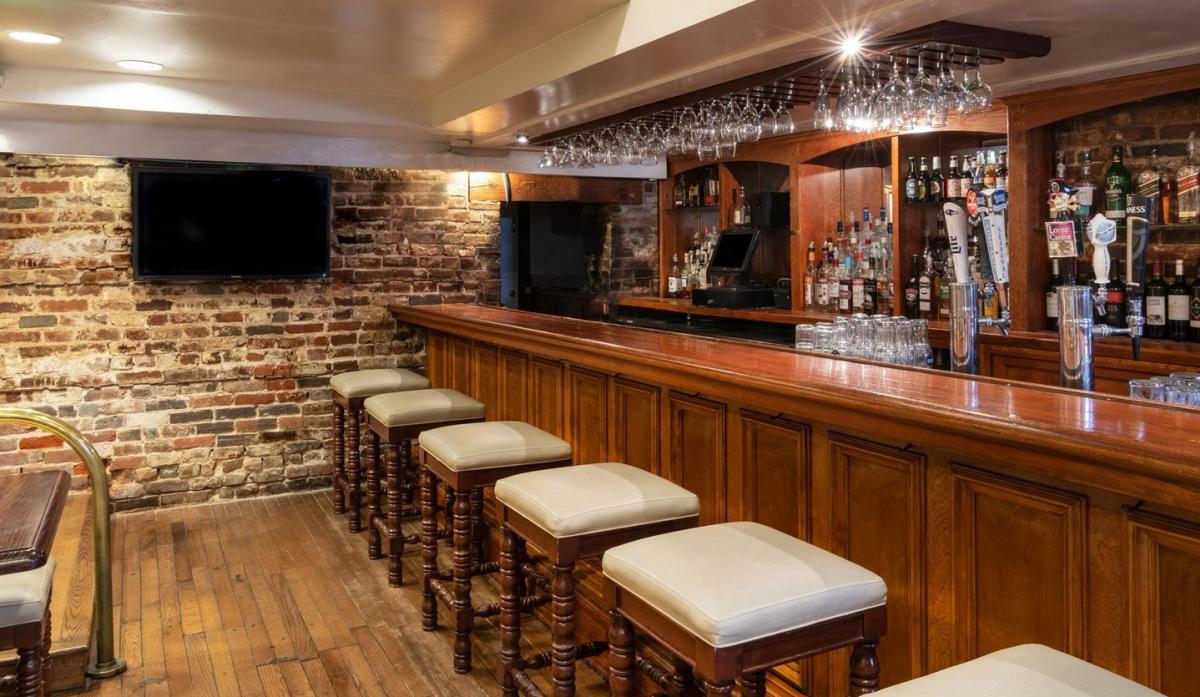
Image courtesy of Historic Inns of Annapolis.
O’Brien’s Restaurant
113 Main Street
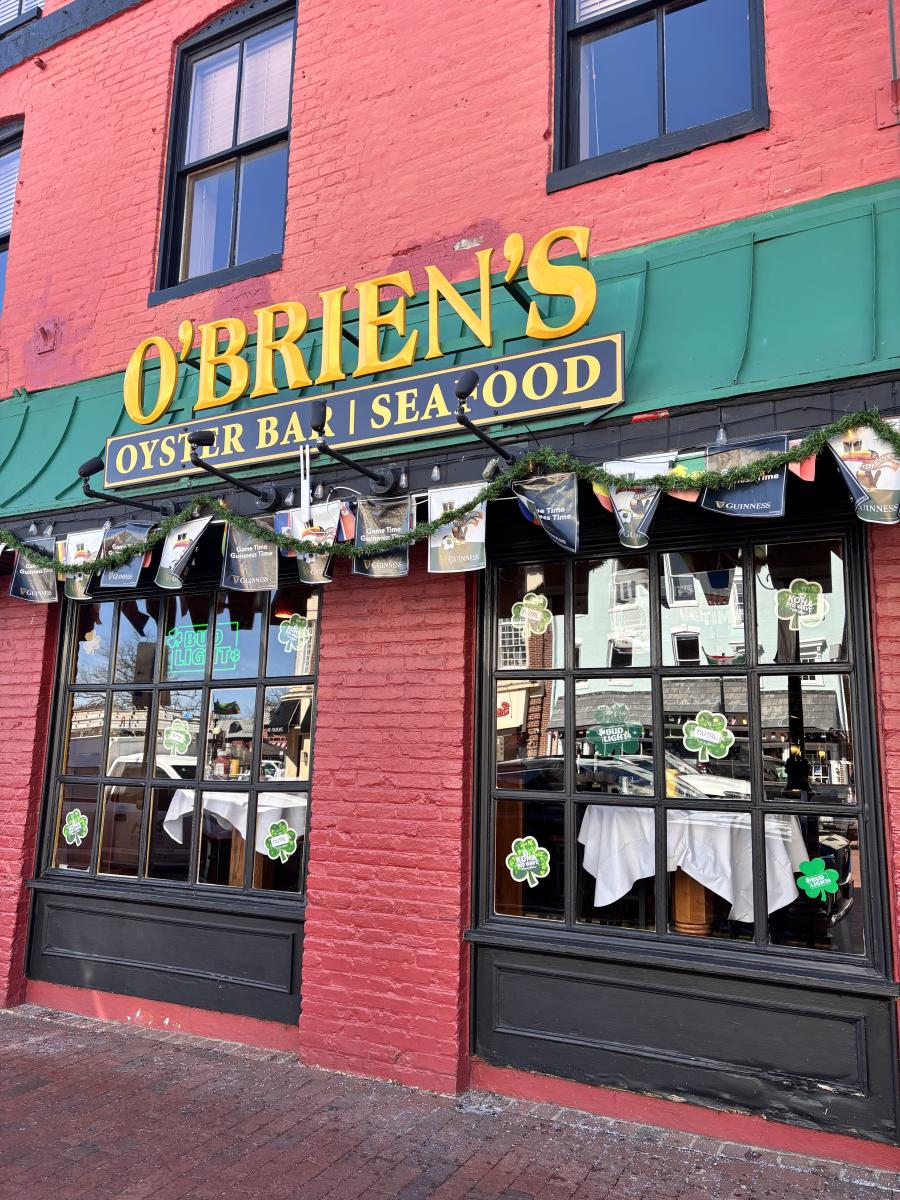
O’Brien’s Restaurant sits on land also once owned by Amos Garrett, which was sold to the Carroll family in 1735. By 1754, it passed to Charles Carroll, “The Barrister.” In 1781, he bequeathed it to nephews Nicholas Maccubbin, Jr. and James Maccubbin, on the condition they change their surnames to Carroll (which they did). In its lifetime, O’Brien’s has functioned as a dry-goods store from 1797–1808, a saloon from 1891–1903, a photography shop by 1908, back to a saloon by 1913, a hotel in the mid-20th century, and today, a restaurant. Enjoy delicious oysters, fresh seafood, and cold beer in this homey, historic haunt.
City Dock
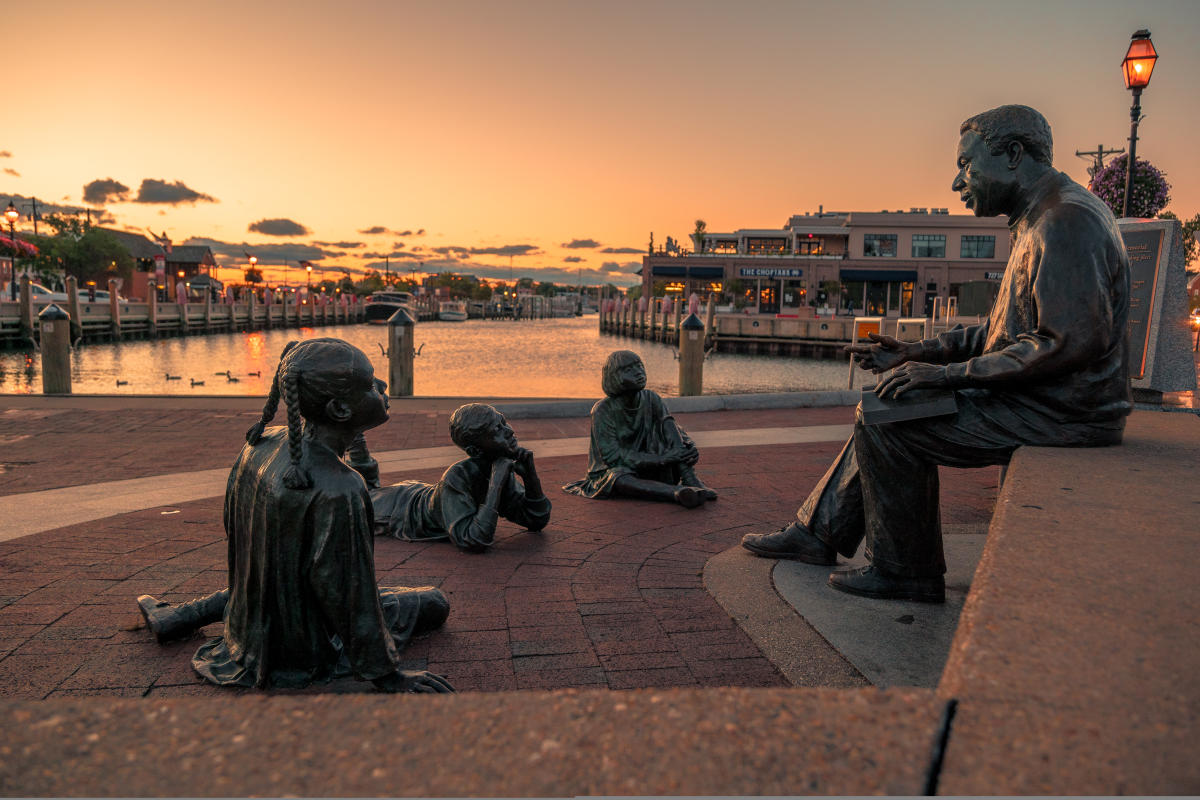
City Dock has been welcoming mariners from around the world for centuries. In 1696, Governor Francis Nicholson set aside this plot of land at the Annapolis harbor for the "use of such Ship Carpenters as would Inhabit thereon and follow their Trades within this Province.” It became known as Ship Carpenter’s Lot, where ships were built and repaired. Visit the historic Waterfront Warehouse, which once stored import and export goods and today houses a model of the colonial waterfront. At the water’s edge, visit the Kunta Kinte-Alex Haley Memorial, which commemorates the site where enslaved Africans were brought and sold and is the only memorial in the country that commemorates the actual name and place of arrival of an enslaved African.
Middleton Tavern
2 Market Space
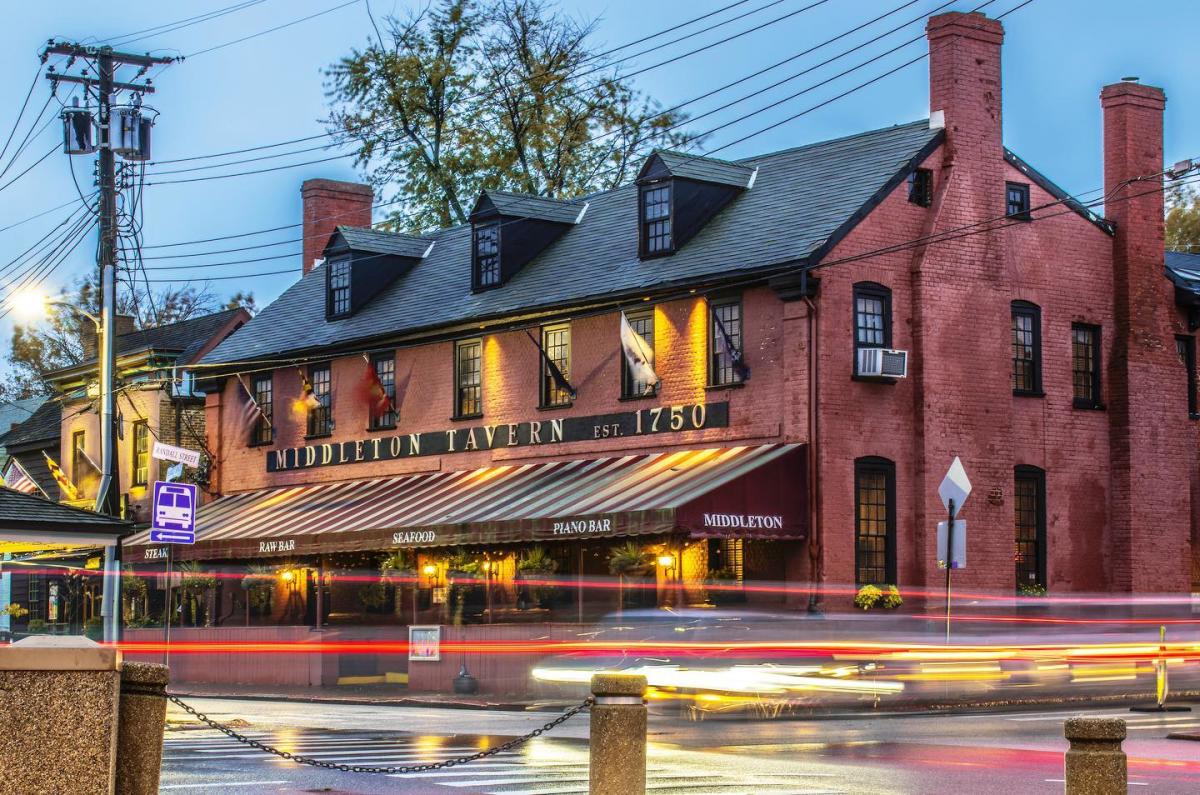
Image courtesy of @bwood_photo.
Middleton Tavern was constructed circa 1754 by successful entrepreneur Horatio Samuel Middleton who named it the “Inn for Seafaring Men,” an overt welcome to its primary customers. When Middleton died in 1770, Ann, his wife would convert the tavern into a boarding house. A notice in the Maryland Gazette read, “As I intend to decline keeping Tavern, I beg of those Persons who have not yet settled their Accounts, to make speedy Payment. I shall take in Boarders, and keep as usual good Hay and Oats, likewise Ferry Boats to any Part of the Bay.” Her portrait, painted by famed artist Charles Willson Peale, hangs in the second-floor gallery of the William Paca House. During the American Revolution, Middleton Tavern was a political, commercial and social hub and hosted important guests including George Washington and Thomas Jefferson.
McGarvey’s Saloon
8 Market Space
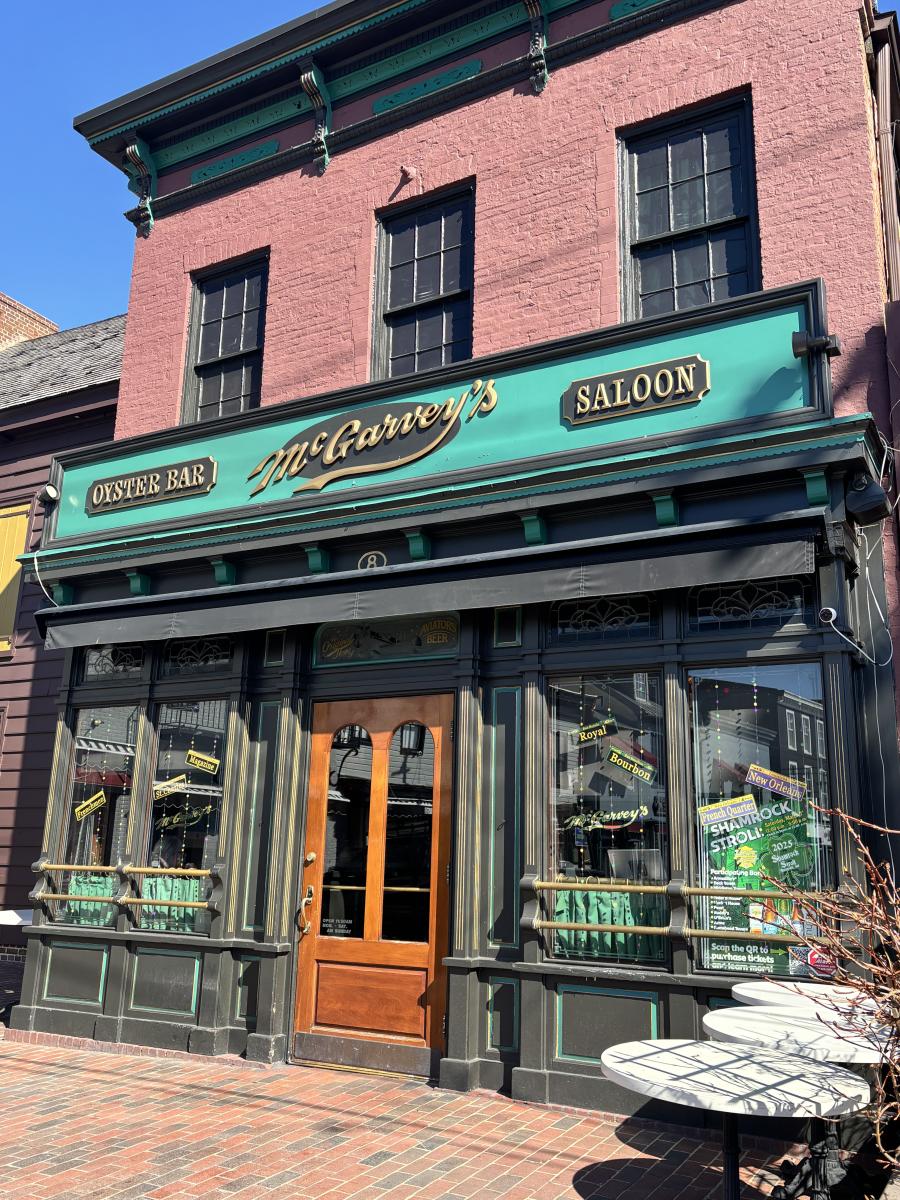
McGarvey’s Saloon sits snugly between the Waterfront Warehouse and Middleton Tavern, soaking up history on either side. Opened by an Air Force Captain and currently owned by three United States Naval Academy graduates, it has been a favorite of midshipmen and locals alike for over 45 years. Between its old-world interior, fresh local shellfish, and its renowned oyster bar, McGarvey’s is classic Annapolis down to its core.
Annapolis Market House
25 Market Space
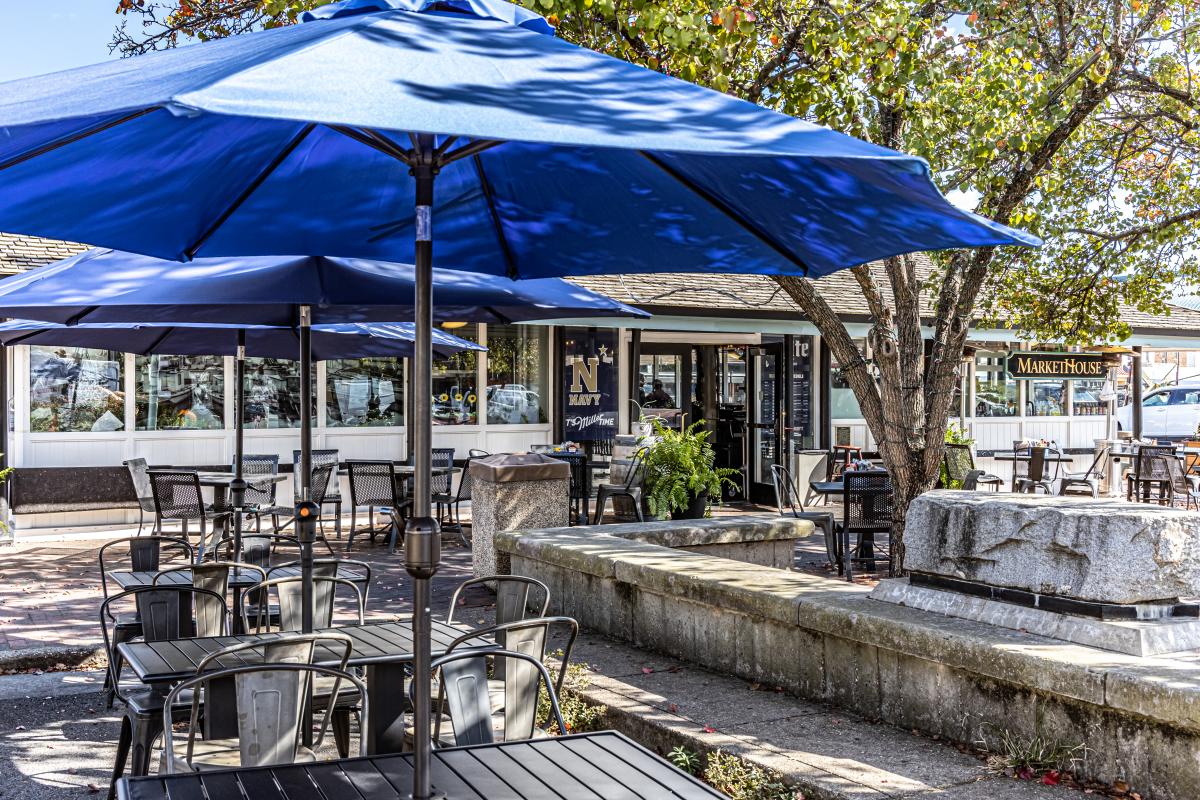
Image courtesy of Shayne Taylor.
The property on which the Market House is located was also part of the Ship Carpenter’s Lot, with its proximity to the harbor making it well suited for its commercial purpose. Since 1784, there has been a market house in this central hub, with the current structure dating from 1857–1858. Inside, you can grab a coffee from local favorite Rise Up Coffee Roasters, sidle up to its bar for fresh oysters served a variety of ways, or sit outside at sunset with dinner and a cocktail and watch the boats cruise Ego Alley.
Dock Street Bar and Grill
136 Dock Street
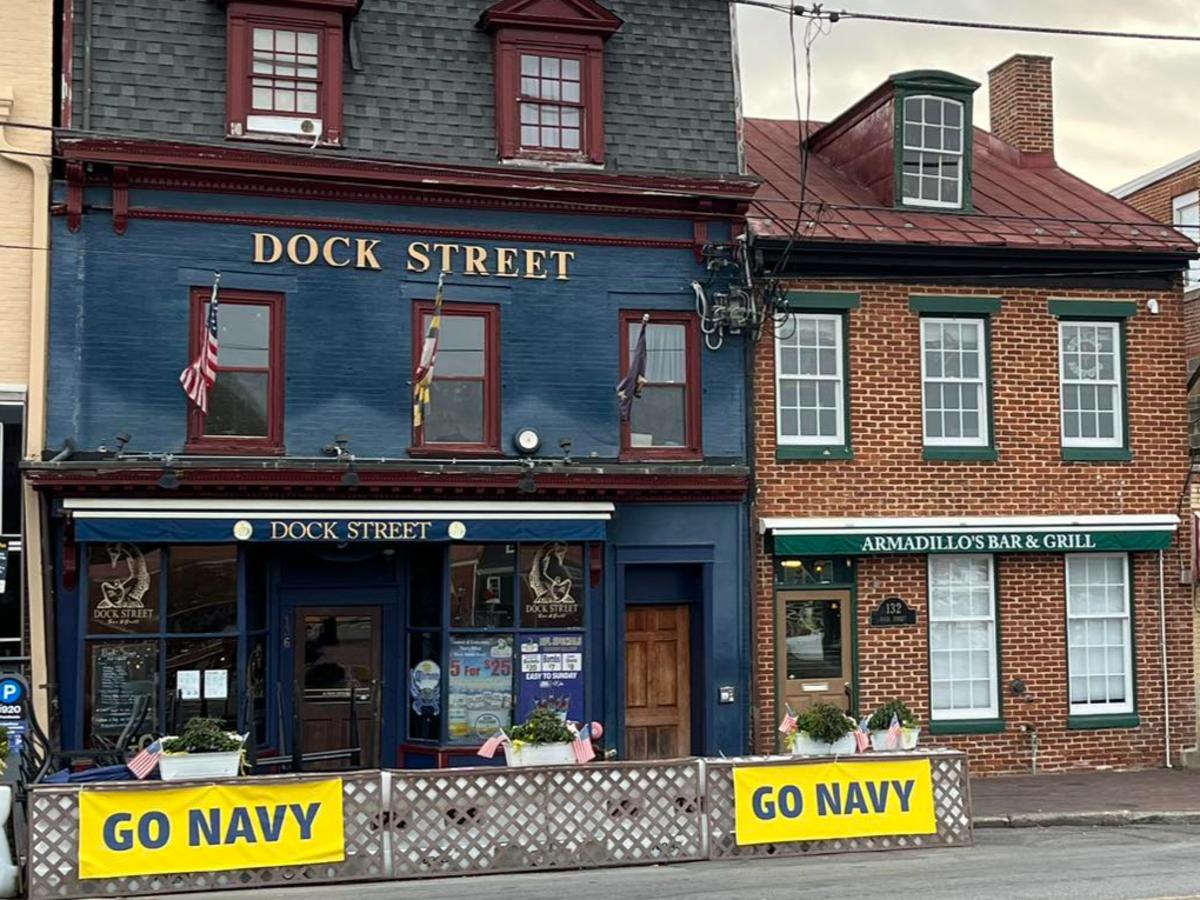
Image courtesy of @chesinspire.
Built circa 1825, Dock Street rests near the site of the 18th-century city jail built by Annapolitan entrepreneur and jack-of-all-trades Patrick Creagh, who is also responsible for the construction of the Old Treasury building on State House Hill. Sit inside and take in history or dine alfresco along Ego Alley and soak up the nautical vibes with the crab cake they claim is the best in Annapolis.
Beyond Annapolis and into Historic Anne Arundel County
Outside of Annapolis, Anne Arundel County is full of ways to interact with the past, whether it’s a visit to National Cryptological Museum, high tea in an 18th-century building, an innovative craft beverage in historic farm country, or a waterman’s museum in South County. As you travel, keep an eye out for historic markers along the roadways and imagine how different the journey might be on horseback or on foot and how welcome a brew and a fire might be after a long trip.
As colonists traveled the roads through the region, taverns along the way acted as waypoints, and supported their basic need for food, drink, and lodging. They were also places to get the latest news. Tavern experiences ranged from very basic and extremely public, to more elevated and some private accommodation. If travelers were lucky, they had friends and family along the way with whom they could stay. Travel the historic routes of the region to visit colonial towns and crossroads and find yourself a roadside tavern to slip a sling to freedom.
Historic London Town & Gardens
839 Londontown Rd, Edgewater, MD 21037

Nestled on the shores of the South River twenty minutes south of downtown Annapolis is the "lost" colonial town of London Town. London Town was created by legislation in 1683 and was the original seat of Anne Arundel County, and a bustling port town in the early 1700s. The last surviving structure of the original town is the brick William Brown house, which was built c. 1760 as an upscale tavern. The rest of the town, which disappeared after the American Revolution, was rediscovered through archaeology. These discoveries included several taverns, including those operated by female tavern keepers, Mehitable Peirpont and Elizabeth Ferguson. The rest of the campus holds a reconstructed carpenter’s shop, a “Lord Mayor’s Tenement”, and an 18th-century tobacco barn. Want to do more than just drink like a revolutionary? Visit Historic London Town & Gardens Museum to see rediscovered artifacts, many related to eating and drinking, and attend one of their workshops on colonial mixology. Looking for something family-friendly? Picnic on their grounds, take a walk through their garden or fish from their dock. You can even arrive by boat.
Beer Farm at Homestead Gardens
743 West Central Avenue, Davidsonville, MD 21035
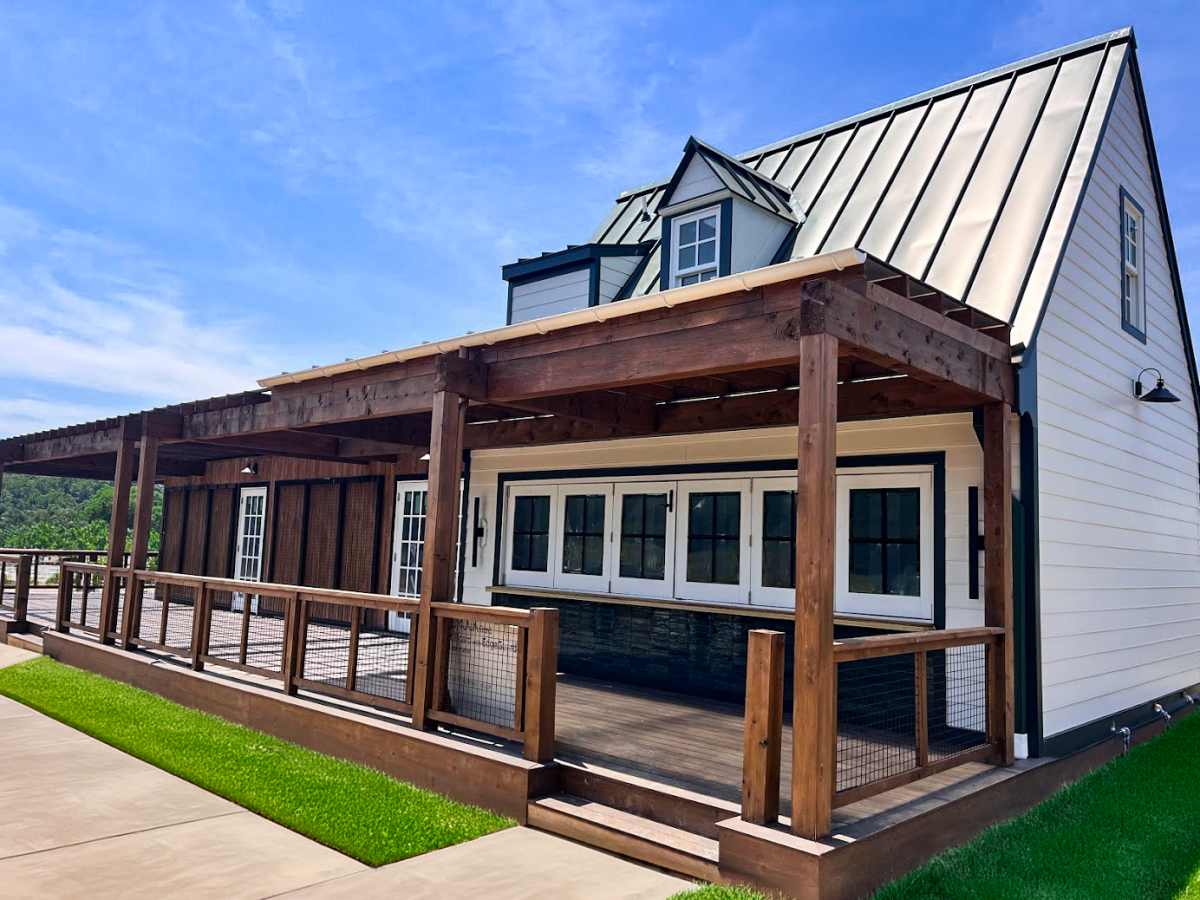
Drive though winding, tree-lined roads and pass historic farms on your way to the Beer Farm at Homestead Gardens, a new addition to the South County fixture Homestead Gardens. Enjoy what happens when innovation, agriculture and sustainability meet to create beers that are light on your carbon footprint, but not on flavor. Looking for your taste of history? 10 minutes away at the intersection of Solomons Island Road and Route 2 is the site of Rawlings’ Tavern, where a certain not-yet-commander-in-chief of the Continental Army stayed and dined on September 26, 1773, on his way to the horse-races in Annapolis. A historic marker marks the spot where the building once stood.
The Rising Sun Inn
1090 Generals Highway, Crownsville, MD 21032
 Image courtesy of Chesapeake Crossroads for the Rising Sun Inn
The Rising Sun Inn was built circa 1753 by tobacco farmer Edward Baldwin and was home to him, his wife, and four children James, Henry, Lydia, and Deborah. He died young and the property passed to his sons. Henry received the land and the home, although his brother James ran the property while Henry served in the Revolutionary War. After the war in 1784, Henry married Sarah Hall Rawlings, widow of tavern keeper Francis Rawlings Jr. and secured a tavern license in 1785.
Today, the Ann Arundel chapter of the Daughters of the American Revolution own and open the Inn to the public, as well as host numerous events, including “Tea and Tours,” flower arranging workshops, and bourbon tastings.
Nearby, on Veteran’s Highway is a historic marker denoting the site of Widow Ramsey’s Tavern, where George Washington breakfasted on June 7, 1773, and again on May 6, 1775, as he traveled north to take command of the revolutionary forces.
The 250th anniversary of the Declaration of Independence is inspiring our modern-day pubs, taverns, and ordinaries to create fresh and new libations that harken back to the Revolutionary War, use colonial recipes, or are a completely modern toast to liberty. Check back here often to see the latest and greatest offerings.

A250 Homepage
Time Travel to Experience America 250! Step back in time to Annapolis, where the echoes of 1776 still linger in every cobblestone. Wander the streets George Washington once walked, dine in taverns frequented by Thomas Jefferson, and meet the household of one of Maryland’s Declaration of Independence...